Staff Direct - Live In Caretaker Positions Near Me: Full Property Management Roles with Accommodation Across the UK
Live-in caretaker positions offer a rare combination: secure housing and a steady income in a single package. Staff Direct connects experienced caretakers, handypersons, and multi-skilled candidates with live-in caretaker jobs at residential blocks, schools, private estates, and care homes across the UK.
Live-in caretaker positions provide rent-free or subsidised accommodation alongside a salary for managing the day-to-day maintenance, security, and upkeep of a property. Roles range from residential block caretakers and school site caretakers to estate caretakers and care home premises managers. No formal qualifications are required for most positions — practical handyperson skills, reliability, and a good DBS record are what employers value most. Staff Direct places candidates into caretaker jobs across Hull, Durham, Exeter, London, and the wider UK, with accommodation packages that can add £8,000–£15,000+ to your total compensation.
- Who These Roles Suit
- Types of Live-In Caretaker Roles Available
- Typical Day-to-Day Responsibilities
- What the Employer Provides
- Candidate Requirements & Desirable Skills
- How to Apply: Step-by-Step Process
- Salary & Accommodation Packages
- Current Caretaker Vacancies
- Real Placement Stories
- What Our Candidates Say
- Frequently Asked Questions
- Apply with Staff Direct
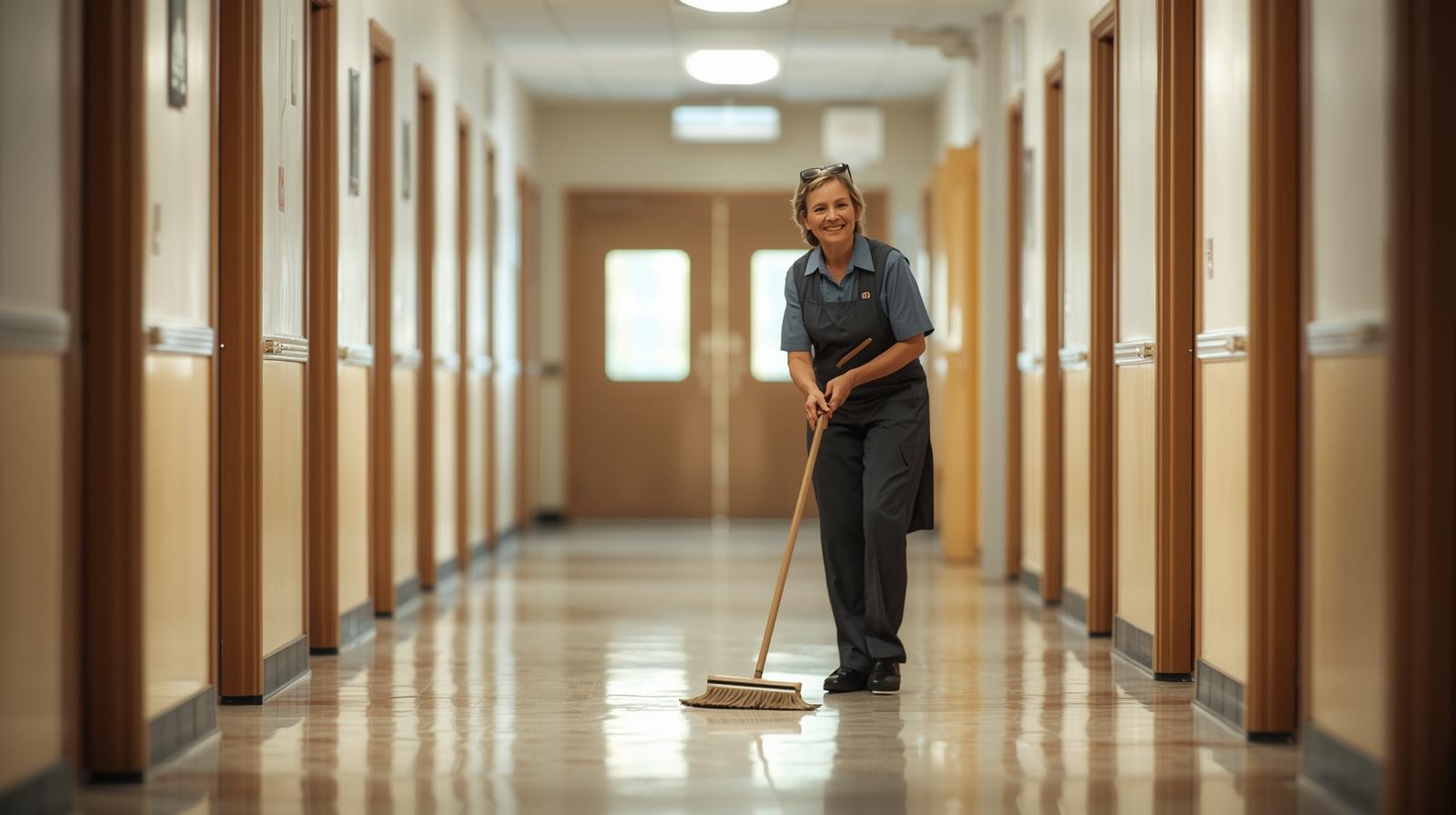
A live-in caretaker position is one of the few remaining roles in the UK that offers genuine housing stability alongside permanent employment. With rental costs continuing to rise across the country, the combination of rent-free accommodation, a regular salary, and the satisfaction of hands-on property management makes these roles increasingly sought-after by experienced caretakers, ex-tradespeople, hospitality workers looking for a change, and reliable multi-skilled candidates seeking a fresh start.
This guide covers everything you need to know about caretaker jobs near you that include accommodation — the types of properties hiring, what the work actually involves, what employers provide, and how to apply through Staff Direct. Whether you are searching for school caretaker jobs in Hull and Durham, estate management positions in the countryside, or residential block caretaker roles in London, this guide gives you a clear picture of what to expect in 2026.
1. Who Are Live-In Caretaker Positions Best Suited To?
Who is suited to live-in caretaker jobs? Live-in caretaker positions suit experienced caretakers and site managers, ex-tradespeople with practical maintenance skills, hospitality workers seeking stable housing, reliable multi-skilled candidates comfortable with lone working, and career changers who value independence, hands-on work, and the security of accommodation tied to employment.
Live-in caretaker roles attract a genuinely diverse range of candidates. You do not need to come from a traditional caretaking background to succeed — what matters most is practical ability, reliability, and a willingness to take ownership of a property's upkeep.
Experienced caretakers and site managers looking to upgrade their package with accommodation represent the most straightforward match. If you are already working as a caretaker without housing, a live-in position can significantly improve your overall compensation.
Ex-tradespeople — plumbers, joiners, electricians, painters, and general builders — bring exactly the practical skills that employers value most. If you have a trade background and want to move away from site-to-site work into a stable, single-location role with housing included, live-in caretaking is a natural fit.
Hospitality professionals — particularly hotel maintenance staff, porters, and housekeeping supervisors — already understand property standards, guest service, and the discipline of keeping a building running smoothly. The transition to caretaking is straightforward.
Career changers and lone workers who value independence, practical problem-solving, and the security of combined housing and employment find caretaker roles deeply rewarding. If you are someone who takes pride in maintaining standards and solving problems autonomously, this work suits your temperament.
2. Types of Live-In Caretaker Roles Available
What types of live-in caretaker jobs are available? Live-in caretaker positions include residential block and site caretakers for flats and HMOs, estate and house caretakers for private properties, school and college site supervisors, care home and assisted living premises caretakers, and lettings or property management live-in roles managing small portfolios of rental properties.
School caretaker positions are among the most popular live-in roles, offering detached accommodation on school grounds with family-friendly housing and term-time rhythm. Staff Direct regularly places candidates into school caretaker roles in Hull, school caretaker jobs in Durham, and positions across the North East and beyond. These roles require an enhanced DBS check due to the school environment.
Estate and private property caretaker positions suit candidates who enjoy rural or semi-rural living. Accommodation is typically a cottage or lodge on the estate grounds, and responsibilities extend to gardens, woodland, boundaries, and outbuildings alongside the main property. These roles often welcome families and pets.
Residential block caretakers manage apartment buildings, communal areas, and grounds on behalf of freeholders or management companies. The accommodation is usually a flat within the block, making this ideal for single candidates or couples in urban locations.
3. Typical Day-to-Day Responsibilities
What does a live-in caretaker do? A live-in caretaker provides on-site security and keyholding, carries out general repairs and maintenance, manages grounds and garden upkeep, cleans communal areas, oversees waste management, liaises with contractors, conducts health and safety checks, responds to emergencies out of hours, and supports lettings with vacant property inspections.
The day-to-day work of a caretaker varies significantly depending on the property type, but certain core responsibilities remain consistent across virtually all caretaker jobs:
On-site presence and keyholding is the foundation of every live-in role. Your physical presence on the property provides security, deters antisocial behaviour, and gives residents, tenants, or school staff reassurance that someone is available. Keyholding means you are the first point of contact for alarm activations, emergency callouts, and contractor access.
Repairs and general maintenance cover the practical handyperson work that keeps a building functioning. This includes fixing leaking taps, repairing door locks, patching plasterwork, painting, clearing blocked drains, replacing light fittings, and addressing minor joinery issues. You are expected to handle routine repairs independently and know when a job requires a specialist contractor.
Grounds and garden upkeep involves mowing lawns, maintaining hedges, clearing leaves, managing flower beds, gritting paths in winter, and keeping external areas presentable. For school caretaker roles, this extends to sports pitches, playgrounds, and car park maintenance. Estate caretakers may manage significantly larger grounds involving ride-on mowers and woodland clearance.
Cleaning communal areas is standard in residential block and school positions. This includes entrance halls, stairwells, corridors, lifts, bin stores, and shared facilities. Maintaining cleaning standards across these spaces directly impacts resident satisfaction and inspection outcomes.
Health and safety checks, contractor liaison, and emergency response round out the role. Fire alarm testing, legionella monitoring, asbestos register awareness, and ensuring contractor compliance with site rules are all part of a modern caretaker's responsibilities. When something goes wrong at 2am — a burst pipe, an alarm activation, or a security breach — you are the person who responds.
4. What the Employer Typically Provides
What do employers provide in live-in caretaker roles? Typical packages include furnished or unfurnished accommodation (rent-free or heavily subsidised), council tax arrangements (often covered), utilities contribution or full inclusion, private garden access, a salary between £22,000 and £35,000, basic tools and PPE, an on-call rota with compensation, and a service occupancy agreement outlining accommodation terms.
Furnished or unfurnished, ranging from a one-bed flat in a residential block to a detached house on school grounds or a cottage on a rural estate. Rent-free or heavily subsidised — the most valuable element of the package.
Salaries of £22,000–£35,000 plus the value of accommodation (worth £8,000–£15,000+ annually). HMRC may apply specific rules on accommodation provided for the better performance of duties.
Many employers include all utilities. Council tax is frequently covered, particularly for school and estate roles where accommodation is essential to the position. Always confirm the specifics during interview.
Basic maintenance tools and PPE provided. On-call rotas are structured with clear expectations, and additional compensation or time in lieu is standard for out-of-hours callouts.
5. Candidate Requirements & Desirable Skills
What skills do you need for a live-in caretaker job? Essential requirements include practical handyperson skills in plumbing, joinery, painting, and basic electrics, reliability for lone working, an enhanced DBS check for school and care settings, and UK right to work. Desirable skills include grounds machinery experience, a driving licence, first aid certification, fire safety training, and legionella awareness.
The strongest candidates for caretaker handyman jobs combine practical ability with a professional, approachable manner. You will be the face of the property for residents or staff, so the ability to communicate clearly and handle requests diplomatically is just as important as being able to fix a dripping tap. Learn more about why employers choose Staff Direct to find candidates with this balance of skills.
6. How to Apply: Step-by-Step Process
How do you apply for a live-in caretaker position? Through Staff Direct: (1) Register online with your CV and preferences, (2) A consultant reviews your skills and DBS status, (3) Complete a pre-screen call to confirm experience and household needs, (4) Attend a site visit, interview, and accommodation tour, (5) Receive a conditional offer and review the service occupancy agreement before moving in.
Quick Registration
Register with Staff Direct online or by phone. Provide your contact details, work history, qualifications, and preferences including preferred location, property type, and any household requirements such as partner or family accommodation.
CV Review & Skills Assessment
A Staff Direct recruitment consultant reviews your CV and assesses your practical maintenance skills, relevant experience, and suitability for live-in roles. DBS status, driving licence, and right-to-work documentation are verified at this stage.
Pre-Screen Call & Role Matching
A telephone or video call confirms your experience, on-call expectations, and household arrangements. Staff Direct matches you with suitable caretaker vacancies near you based on your skills, location preferences, and accommodation needs.
Site Visit, Interview & Accommodation Tour
Attend a site visit and formal interview with the employer. This always includes a tour of the accommodation so you can assess the property, confirm the full package details, and ensure it meets your expectations before committing.
Conditional Offer & Move-In
Receive a conditional offer subject to enhanced DBS clearance (where required), references, and outstanding documentation. Review the service occupancy agreement carefully, agree your start date and move-in arrangements, and begin your new role.
7. Salary & Accommodation Packages by Role Type
How much do live-in caretakers earn in the UK? Salaries range from £22,000 to £35,000 depending on the role and location. When you add the value of rent-free accommodation (typically £8,000–£15,000+ per year), the total effective compensation for a live-in caretaker position is significantly higher than equivalent non-residential roles — often equivalent to a £30,000–£50,000 package.
8. Current Caretaker Vacancies Through Staff Direct
Staff Direct places caretakers into positions across the UK. Here is a sample of the roles we regularly fill — including school caretaker jobs, residential caretaker positions, and property management roles:
New caretaker vacancies are added regularly. Browse all current positions or contact Staff Direct to discuss your requirements. Employers can post a caretaker vacancy here.
9. Real Placement Stories
From Hotel Maintenance to Live-In School Caretaker in Durham
Background: Craig, 38, had spent 12 years working in hotel maintenance across the North East — fixing everything from boilers to bedroom furniture. He was renting privately and spending over £800 per month on housing costs. When his landlord gave notice, Craig needed to find both a new home and a secure career path simultaneously.
Challenge: Craig had no direct school caretaking experience, though his practical skills were extensive. He needed a role that provided accommodation, ideally suited his family (partner and one child), and was located within the Durham area close to his existing support network.
Solution: Staff Direct identified Craig's hotel maintenance background as an excellent fit for school caretaker vacancies in the Durham area. His plumbing, electrical, and joinery skills transferred directly. After a pre-screen call and enhanced DBS application, Craig was matched with a primary school offering a three-bedroom detached caretaker house on the school grounds.
Outcome: Craig moved his family into the caretaker house within three weeks of registering with Staff Direct. He is now settled in a role that uses all his practical skills, provides stable housing for his family, and eliminates the £800+ monthly rental cost he was previously paying. The school has described him as one of the most capable caretakers they have ever employed.
Retired Tradesman Finds New Purpose as Estate Caretaker
Background: David, 58, had taken early retirement from a career in joinery and building maintenance but found himself restless after just six months. Living alone in a rented flat, he wanted a role that combined his practical skills with a sense of purpose — ideally one that solved his housing situation as well.
Challenge: David was looking for something less physically demanding than full-time construction work but still hands-on. He wanted a rural or semi-rural setting where he could use his woodworking and maintenance expertise while enjoying the autonomy of lone working.
Solution: Staff Direct matched David with a private estate caretaker position managing a country house and its grounds. The role included a two-bedroom cottage on the estate with private garden access, all utilities included, and a salary reflecting his extensive experience. His responsibilities cover building maintenance, grounds upkeep, security, and contractor coordination.
Outcome: David describes the role as the best decision he has made since retiring from construction. The combination of meaningful work, beautiful surroundings, and rent-free accommodation has transformed his quality of life. His employer values his reliability and craftsmanship, and the arrangement suits both parties perfectly.
10. What Our Candidates Say About Staff Direct
"Staff Direct found me a live-in school caretaker role within three weeks of registering. The accommodation is a proper three-bed house on the school grounds — my family is settled, my commute is literally walking across the playground, and the job uses every practical skill I've picked up over the years. I cannot recommend them enough."
"I was struggling to find anywhere affordable to rent in Hull while working part-time maintenance jobs. Staff Direct connected me with a residential block caretaker role that included a one-bed flat, all utilities, and a decent salary. It genuinely changed my situation overnight. The team were professional, quick, and really understood what I needed."
"After 20 years in the building trade, I wanted something steadier. Staff Direct matched me with an estate caretaker position that came with a cottage on the grounds. The whole process from first call to moving in took less than a month. The consultant was honest about what to expect and the role has been exactly as described."
"I came from a hospitality background and wasn't sure if caretaking was the right move. Staff Direct talked me through exactly what live-in roles involve, matched me with a care home premises caretaker position, and the transition has been brilliant. The on-site flat is comfortable, the team are supportive, and the work is genuinely satisfying."
11. Frequently Asked Questions
Live-In Caretaker Readiness Self-Assessment
Tick the statements that apply to you. The more you tick, the stronger your candidacy for live-in caretaker positions:
8–10 ticks: You are an excellent candidate — apply now. 5–7 ticks: You are well-suited with minor development areas. Below 5: Consider building practical maintenance experience first through handyperson or site assistant roles.
Key Takeaways
Accommodation transforms the package — Rent-free housing worth £8,000–£15,000+ per year makes live-in caretaker roles significantly more valuable than their headline salary suggests.
No formal qualifications needed — Practical handyperson skills, reliability, and a clean DBS are what employers value above academic credentials.
Diverse property types — From school sites and residential blocks to private estates and care homes, there is a live-in caretaker role for every preference.
Transferable skills welcome — Tradespeople, hotel maintenance staff, and hospitality workers all transition successfully into caretaking roles.
Specialist agencies accelerate placement — Registering with Staff Direct gives you access to live-in vacancies that may not be publicly advertised.
Ready to Find Your Live-In Caretaker Position?
Whether you are looking for school caretaker jobs in Durham and Hull, estate caretaker roles with a country cottage, or residential caretaker positions in London, Staff Direct can match you with the right opportunity — accommodation included.
Related Articles & Resources
About the Author: Staff Direct Recruitment Specialists
Staff Direct is a specialist caretaker and property management recruitment agency with extensive experience placing live-in caretakers, school site managers, and handypersons across the UK. Our consultants understand the unique requirements of live-in roles — from accommodation logistics and DBS processing to on-call expectations and service occupancy agreements. We place caretakers into school sites across Hull, Durham, Exeter, London, and throughout the UK. For career advice, vacancy alerts, or to register as a candidate, visit staff-direct.co.uk or contact us directly.
© 2026 Staff Direct | staff-direct.co.uk | This guide is for informational purposes. Salary figures, accommodation details, and vacancy availability are approximate and subject to change. Service occupancy and employment terms vary by employer — always review your contract carefully. Last updated: February 2026.