
Is Bank Holiday A Working Day? The Definitive Guide for UK Employers & Staff
Navigating bank holiday working rights, pay, and staffing strategies is crucial for businesses and employees across the UK. This comprehensive guide clarifies the legalities, explores the impact of events like the England Team Bank Holiday, and provides actionable solutions for seamless workforce management.
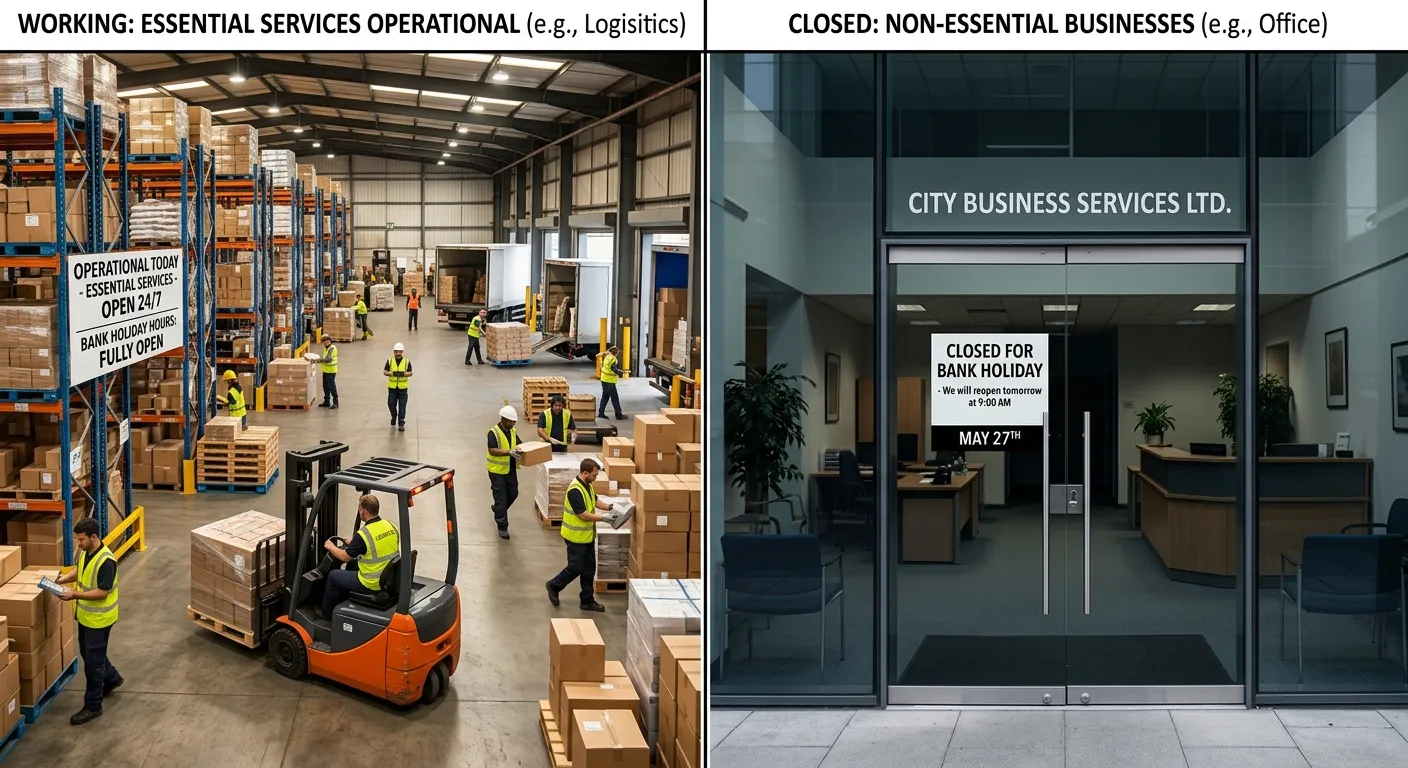
Bank Holiday Working: A Multi-Category Overview
Use the tabs below to explore the key aspects of bank holiday work, from legal rights to staffing solutions.
The Legal Foundation
In the UK, the simple answer to"Is Bank Holiday A Working Day?" is: No, there is no automatic legal right to have bank holidays off. Unlike many other European countries, UK employment law does not mandate time off on public holidays. Entitlement to bank holidays off work is determined by the terms of an employee's contract.
There are typically eight permanent bank holidays in England and Wales: New Year's Day, Good Friday, Easter Monday, Early May, Spring, Summer, Christmas Day, and Boxing Day. Scotland and Northern Ireland have additional days. A key point of recent discussion has been the potential for an England Team Bank Holiday following major sporting successes, which would follow the same contractual principles.
Pro-Tip for Employers:
Always explicitly state bank holiday entitlements in the employment contract or staff handbook. Ambiguity leads to disputes. Clearly define if they are given as paid leave, if they come out of the statutory annual leave allowance, and what the policy is for required work on those days.
Understanding Employee Rights & Pay
If an employee's contract states they get bank holidays off, they are entitled to paid leave on those days. If they are required to work, they may be entitled to enhanced pay (often called"bank holiday pay" or"premium pay"), but this is not a legal requirement. It is a matter of contract or company policy.
- Statutory Annual Leave: Many employers include bank holidays within an employee's 5.6 weeks of statutory annual leave. This means if you take the eight bank holidays off, you have 20 days (for a full-time worker) remaining for other leave.
- Enhanced Pay: Common in sectors like hospitality, retail, healthcare, and logistics (e.g., warehouse roles), where working bank holidays is essential. Rates of"time and a half" or"double time" are typical incentives.
- Time Off In Lieu (TOIL): If an employee works a bank holiday, they may be given an alternative day off instead of extra pay.
Strategic Staffing for Bank Holidays
For businesses that must operate—such as hospitality venues, warehouses, and healthcare providers—managing bank holiday staffing is a critical operational challenge. A robust strategy often involves a mix of permanent staff volunteers (incentivised by enhanced pay) and flexible temporary workers.
Partnering with a specialised temporary staffing agency provides a reliable pipeline of pre-vetted workers ready to cover shifts, ensuring business continuity without overburdening your core team. This is especially useful for unexpected surges in demand or for covering the potential England Team Bank Holiday, where national celebrations could drive specific sector needs.
The Broader Business Impact
Bank holidays significantly affect productivity, cash flow, and customer service. Sectors like e-commerce and logistics face peak demand around holidays, requiring scaled-up teams. Conversely, offices and manufacturing may shut down entirely.
Effective planning mitigates risk. This includes forecasting demand, communicating schedules well in advance, and having a clear contingency staffing plan. Understanding the true cost of being understaffed—lost orders, poor customer experience, and overworked permanent staff—highlights the value of flexible staffing solutions.
Key Considerations for Managing Bank Holiday Work
Contract Clarity is King
The single most important factor determining if a bank holiday is a working day is the employee's contract. Ambiguity causes conflict. Ensure policies on entitlement, pay, and required work are documented and agreed upon from day one. This applies equally to permanent hires and temp staff.
Sector-Specific Norms
Expectations vary wildly by industry. In construction, sites often close. In warehouses and retail, it's often all hands on deck. Understanding your industry's standard practice helps set competitive policies and manage staff expectations effectively.
Flexible Staffing Solutions
Relying solely on permanent staff for bank holiday cover can strain morale and budgets. Integrating temporary staffing solutions provides agility. You can scale up for demand (like a potential England Team Bank Holiday) and down afterwards, controlling costs while maintaining service levels.
Communication & Fairness
Announce bank holiday rotas as early as possible. Use a fair system to allocate who works, considering volunteer requests first. Transparent communication about pay (enhanced rates or TOIL) prevents resentment and builds a positive workplace culture, reducing turnover.
Legal Compliance Check
Even without specific bank holiday laws, general working time regulations apply. Ensure staff don't exceed maximum weekly working hours (48 on average) and have adequate rest breaks. This is crucial when managing intense periods like holiday sales or event staffing.
Planning for Ad-hoc Holidays
The concept of an England Team Bank Holiday highlights the need for agile planning. Such one-off national events can create sudden, unpredictable staffing demands. Having a trusted recruitment partner like Staff Direct on retainer ensures you can access qualified temporary workers at short notice to capitalise on opportunities or maintain essential services.
Bank Holidays in the Age of Remote Work
The rise of remote work adds a new layer to the question"Is Bank Holiday A Working Day?" For remote employees, the physical office being closed is irrelevant. The same contractual principles apply: if their contract grants bank holidays off, they are entitled to paid leave, regardless of location.
However, remote work can blur boundaries. Employers must be clear that a bank holiday is a company-wide day off, not just an office closure. This ensures all staff, including those in remote roles found on platforms like ZipRecruiter or those exploring why remote working is better, disconnect and recharge.
Managing a Hybrid Workforce
For businesses with a mix of on-site and remote staff, consistency is key. Apply the same bank holiday policies to all employees to prevent perceptions of unfairness. If on-site staff get enhanced pay for working, remote staff required to work should receive the same benefit.
Could a four-day workweek change how we view bank holidays? Explore the future of work scheduling.
Real-World Scenarios & Strategic Responses
Scenario 1: The Essential Logistics Hub
A major warehouse in London cannot shut down on bank holidays due to next-day delivery commitments. 60% of permanent staff volunteer for double-time pay. To cover the remaining 40% of shifts and manage increased volume, the manager uses a pre-vetted pool of temporary operatives from a staffing agency, ensuring full operational capacity without exhausting the core team.
Key Takeaway:
A hybrid staffing model (permanent volunteers + temporary support) balances cost, morale, and business needs effectively.
Scenario 2: The Hospitality Venue During an England Team Bank Holiday
A national football victory leads to an impromptu day of celebration. Pubs, bars, and event spaces are inundated. A savvy venue manager, anticipating potential demand, had already contacted their hospitality staffing agency to place extra waiters, bartenders, and security on standby. When the holiday is confirmed, they activate this temporary workforce within hours, maximising profits during the surge.
Key Takeaway:
Proactive relationships with flexible staffing agencies provide the agility to capitalise on unpredictable, high-demand events.
Expert Insight: The Cost of Getting It Wrong
Mismanaging bank holiday staffing has tangible costs:
- Low Morale & High Turnover: Forcing staff to work without fair compensation or notice leads to dissatisfaction and increased churn, triggering expensive rehiring processes.
- Lost Revenue: Being understaffed during peak times means missed sales opportunities, slow order fulfilment, and damaged customer reputation.
- Operational Risk: Skeleton crews can lead to safety compromises, especially in environments like construction or warehousing.
- Legal Risk: Incorrectly calculating pay or violating working time directives can result in employment tribunals and financial penalties.
Investing in clear policies and reliable staffing solutions mitigates these risks entirely.
Frequently Asked Questions: Is Bank Holiday A Working Day?
Quick, authoritative answers to the most common queries from employers and employees.
Yes, if your employment contract states that you may be required to work on bank holidays. There is no overarching UK law granting the right to have bank holidays off. Your entitlement is purely contractual. However, employers should follow a fair process, give as much notice as possible, and honour any enhanced pay or Time Off In Lieu (TOIL) agreements.
No. There is no legal requirement to pay enhanced rates (e.g., time and a half, double time) for work on a bank holiday. Enhanced pay is a matter of contract, collective agreement, or employer discretion. It is a very common practice in many industries to incentivise staff to work on these days. Always check your contract or company handbook.
If a bank holiday falls on a Saturday or Sunday, a"substitute" or"bank holiday in lieu" is usually given on the following Monday (or Tuesday if Christmas Day falls on a weekend). Your entitlement to this substitute day depends on your contract. Some contracts specify you only get the actual day off, not a substitute. This is a common area of confusion, so clear contractual wording is essential.
Temporary workers accrue holiday pay, including an element for bank holidays, under the Holiday Pay Accrual method. They are typically paid a"rolled-up" holiday pay rate with each timesheet. Their entitlement to specific bank holidays off depends on the assignment and the hiring business's policy. Many temp workers actively seek bank holiday shifts for the higher pay often offered. Platforms like Staff Direct's job board frequently list such opportunities.
Any new, one-off bank holiday (e.g., for a royal jubilee or national sporting victory) would be treated exactly like a standard bank holiday. There is no separate set of rules. The same contractual principles apply: employees have no automatic right to the day off unless their contract specifies they are entitled to all"public" or"bank" holidays. Businesses would need to plan staffing accordingly, often relying on flexible temp labour to cover essential services or meet surge demand in celebratory sectors.
Secure Your Bank Holiday Workforce Today
Don't let the question"Is Bank Holiday A Working Day" become an operational headache. Whether you need to cover permanent staff absences, scale up for an England Team Bank Holiday celebration, or ensure your warehouse runs smoothly, proactive staffing is the solution.
Staff Direct provides fast, reliable access to pre-screened temporary and permanent staff across sectors including warehousing, hospitality, construction, and administration. Our expertise turns staffing from a challenge into a competitive advantage.
Hire Staff for Bank Holidays NowPost your vacancy in minutes and connect with qualified candidates ready to work.